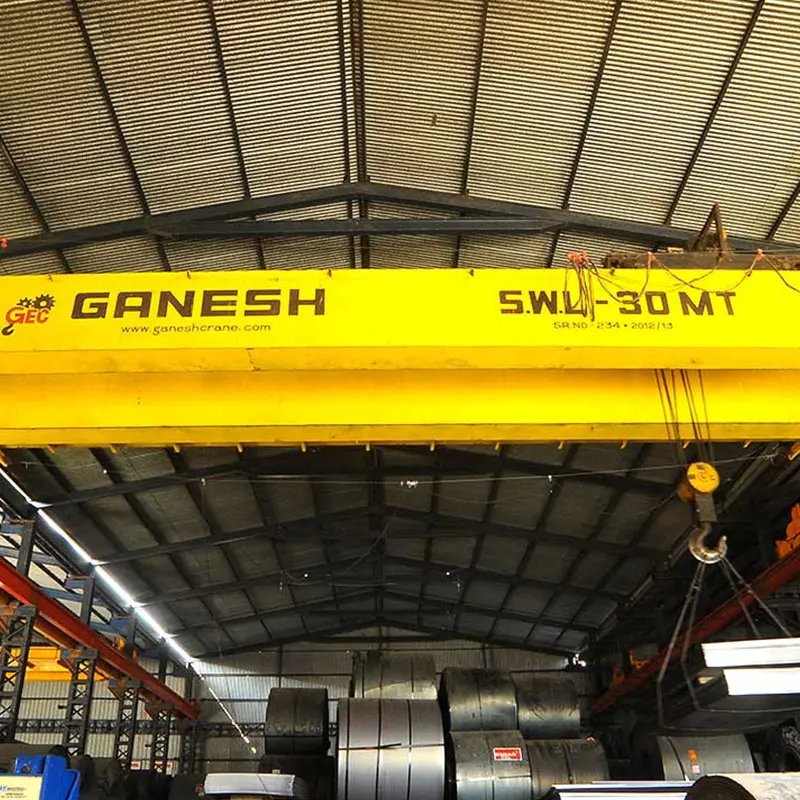
In heavy industrial environments, one piece of equipment often holds the entire operation together — the double girder overhead crane. From steel mills and shipyards to large automobile plants and power stations, this crane is the backbone of serious material handling. It lifts what other cranes simply cannot, spans distances that single girder models never reach, and does it all shift after shift without breaking a sweat.
But buying the wrong crane — or buying from the wrong manufacturer — is an expensive mistake. This guide gives you everything you need to make a confident, informed decision. We cover what a double girder overhead crane is, the types available, standout features, real-world applications, and a practical buying checklist. Whether you are planning a new installation or upgrading existing equipment, this is the only guide you need.
What Is a Double Girder Overhead Crane?
A double girder overhead crane is a bridge-type lifting system that uses two parallel steel beams — called girders — to support a trolley and hoist mechanism. The entire bridge travels along elevated runway rails fixed to the building structure or freestanding supports, giving the crane full three-dimensional movement across the working area.
What separates it from a single girder crane is the use of two main beams instead of one. The trolley rides on top of both girders, which significantly increases the available hook height and allows the crane to handle far heavier loads across much longer spans.
It is also widely known as a Double Girder EOT (Electric Overhead Travelling) Crane, and it operates fully on electric power — making it efficient, controllable, and suitable for continuous industrial use.
Standard specifications:
- Capacity: 1 ton to 100 tons
- Span: 5 meters to 50 meters
- Height of lift: 3 meters to 50 meters
- Duty class: M1 to M8 (Class I to Class IV)
- Operation: Pendant push-button, radio remote control, or operator cabin
Types of Double Girder Overhead Cranes
Depending on your facility layout and the nature of your operations, double girder cranes are available in three main configurations.
Double Girder EOT Crane
This is the standard indoor version. The bridge travels along runway rails mounted to the building’s structural columns. It is designed for factory floors, workshops, and enclosed industrial bays where continuous heavy lifting is required across a fixed area.
Double Girder Gantry Crane
This version stands on legs that travel along ground-level rails instead of elevated runway beams. It is ideal for outdoor yards, open bays, and locations where the building structure cannot support an overhead runway. Common in shipbuilding yards and precast concrete facilities.
Double Girder Goliath Crane
A larger, heavy-duty variant of the gantry design. Goliath cranes span very wide areas with full-height legs on both sides. They are typically used in railway yards, large outdoor manufacturing areas, and port facilities where massive spans and heavy loads are the norm.
Key Features of a Double Girder Overhead Crane
A properly built double girder overhead crane is packed with engineering features that ensure performance, safety, and long service life:
- Dual-speed control for all motions — hoisting, long travel, and cross travel — for precise load positioning
- Variable Frequency Drive (VFD) on all motions for smooth, jerk-free starts and stops
- Radio remote control and cabin operation options for flexible, safe crane management
- Heavy-duty box girder construction fabricated from IS-2062 grade steel (Essar or SAIL make) to handle maximum deflection within 1/750th of the span
- MS checkered plate walkway platform with full handrailing along the girder for safe maintenance access
- Wire rope from Usha Martin — selected as per crane capacity and IS code requirements
- Electro-hydraulic or electromagnetic fail-safe brakes on hoisting, long travel, and cross travel
- Drag chain festoon system for organized, durable cable routing along the bridge
- Steel end stoppers with spring buffers to limit trolley travel and absorb collision impact
- 110V control voltage for operator safety against electrical shock
- Siren alert while crane is travelling for enhanced floor-level safety
- Dustproof electrical panel with reputed brand switchgear and interlocking to prevent simultaneous opposite motion
Built-In Safety Systems
Safety is engineered into every double girder overhead crane from the ground up:
- Over-hoisting and over-lowering prevention limit switches
- Hook safety latch to prevent accidental load drop
- Overload relays that cut power if the rated capacity is exceeded
- Travelling limit switches to restrict bridge and trolley movement within safe zones
- Rubber buffers as a secondary stop against end-of-travel collision
- Emergency stop button in the push-button station
- All-four-core cabling with dedicated earth wire for electrical safety
- Anti-collision device for facilities operating more than one crane on the same runway
Benefits of Choosing a Double Girder Overhead Crane
Facilities that upgrade to a double girder design consistently report meaningful improvements in productivity and safety. Here is why:
- Higher lifting capacity: Handles loads from 1 ton to 100 tons — well beyond what single girder cranes can manage
- Greater hook height: Trolley running on top of the girders delivers significantly more vertical lifting clearance
- Wider span coverage: Spans up to 50 meters eliminate the need for intermediate supports in large bays
- Smooth load control: VFD-driven motors provide gentle acceleration and deceleration, protecting sensitive loads and the crane structure
- Stable heavy-load handling: The 8-wheel end carriage layout distributes load across the runway, reducing stress on the building structure
- Safe maintenance access: Full-length walkway platform with handrailing lets technicians service the crane safely without external scaffolding
- Built for continuous operation: Rated for duty classes up to M8, making it suitable for the most demanding 24-hour industrial environments
- Long service life: IS-2062 certified steel construction and high-quality components deliver decades of reliable operation with proper maintenance
Applications of Double Girder Overhead Cranes
The double girder EOT crane is found wherever industrial operations involve serious, repeated heavy lifting:
- Steel plants and rolling mills — moving billets, coils, slabs, ingots, and finished sections between production stages
- Heavy engineering workshops — assembling large machinery, handling dies, and moving fabricated structures
- Shipyards — positioning hull sections, lifting marine engines, and loading ship modules
- Power plants — handling turbines, generator stators, transformers, and large electrical assemblies
- Automobile manufacturing — moving body frames, press tools, engine assemblies, and stamping dies
- Foundries and forging units — transporting molten metal ladles, large castings, and forged components
- Railway yards and infrastructure projects — lifting track sections, precast bridge girders, and heavy civil components
- Cement and construction material plants — moving bulk raw material handling equipment and large rotating machinery
How to Choose the Right Double Girder Overhead Crane
Getting the crane specification right before you buy saves time, money, and future frustration. Work through these key decisions:
- Define your maximum load: Know the heaviest single lift you will ever need to make. Add a safety buffer and remember that every crane must be tested at 125% of its Safe Working Load before commissioning.
- Measure your span and hook height: Confirm the bay width for span selection. Measure ceiling height and calculate the full vertical travel distance the hook must cover.
- Select the right duty class: Light or infrequent lifting suits M1–M2. Continuous heavy industrial cycles demand M5–M8. Choosing too low a duty class leads to premature failure.
- Choose your operation mode: Pendant push-button is standard for most applications. Wireless remote works well in high-temperature or hazardous areas. A full operator cabin suits high-volume, precision-critical operations.
- Indoor or outdoor installation: Standard cranes are designed for indoor, non-hazardous environments. Outdoor or hazardous area installations require weatherproof enclosures, corrosion-resistant coatings, and explosion-proof electrical systems.
- Check IS code compliance: Insist on cranes manufactured to IS807 and IS3177 standards. These cover design, testing, and safe working load requirements.
- Evaluate after-sales support: A one-year warranty, availability of spare parts, and on-call engineer support are minimum expectations from any serious supplier.
Why Double Girder Overhead Crane Manufacturers Make All the Difference
It is easy to compare cranes on price. What is harder to compare — until something goes wrong — is build quality, material certification, and post-installation support.
Established Double Girder Overhead Crane Manufacturers design equipment to meet Indian Standard codes, use virgin IS-2062 certified steel, source motors and electrical components from reputed brands, and conduct full load testing before dispatch. They also provide installation commissioning, operator training, and genuine spare parts support that keeps the crane running for years.
Ganesh Engineering Co., headquartered at GIDC Vatva, Ahmedabad, Gujarat, has been a trusted name in industrial crane manufacturing since 2004. The company manufactures and supplies double girder overhead cranes across India in capacities ranging from 1 ton to 100 tons and spans up to 50 meters. All cranes are built from unused IS-2062 grade steel, fitted with reputed brand motors, brakes, and electrical systems, and backed by a one-year warranty with dedicated after-sales engineer support. Their manufacturing range covers standard and custom configurations for indoor, outdoor, hazardous, and non-hazardous environments.
When evaluating any manufacturer, ask for their IS code certification, client references, production capacity, and after-sales service policy. A reputable manufacturer saves you significantly more than the price difference over the life of the crane.
Maintenance Tips for Double Girder Overhead Cranes
A double girder overhead crane is built to last — but only if it is looked after properly. Follow this maintenance schedule:
- Before every shift: Visually inspect the wire rope for broken strands, kinks, or corrosion. Check the hook and safety latch. Test all push-button controls and confirm the emergency stop is functional.
- Weekly: Listen for unusual noise from wheels, gearboxes, or motors during operation. Check brake engagement and release.
- Monthly: Test all limit switches — hoisting, lowering, and travel. Lubricate wheels, end carriages, gearboxes, and wire rope sheaves as per the manufacturer’s schedule. Inspect the electrical panel for dust buildup and loose terminals.
- Quarterly: Check runway rail alignment and end stopper condition. Inspect the walkway platform, handrailing, and bolted connections on the bridge structure.
- Annually: Commission a full load test at 125% of SWL with a certified engineer and renew the crane’s test certificate. Repaint any surfaces showing rust using the appropriate industrial protective coating.
Conclusion
A double girder overhead crane is not just a piece of lifting equipment — it is a long-term investment in your facility’s productivity and operational safety. With the right capacity, duty class, and configuration, it delivers decades of reliable heavy-duty performance with minimal downtime.
Whether you need a standard indoor EOT crane, an outdoor gantry variant, or a fully customized solution for a hazardous environment, the double girder overhead crane has a configuration to match. The key is specifying it correctly and sourcing it from a manufacturer who builds to the right standards and stands behind their product after the sale.
If you are ready to explore your options or need a custom quotation, reach out to an experienced crane manufacturer for a facility assessment and tailored recommendation.
Frequently Asked Questions (FAQs)
Q1. What is a double girder overhead crane and how does it work? A double girder overhead crane uses two parallel steel bridge beams to support a trolley and hoist. The bridge travels along elevated runway rails, and the trolley moves across the bridge, allowing the hoist to lift and position loads anywhere within the crane’s working area.
Q2. What is the maximum capacity of a double girder overhead crane? Standard double girder overhead cranes are manufactured in capacities from 1 ton up to 100 tons. For requirements above 100 tons or spans beyond 50 meters, manufacturers can engineer custom solutions based on the specific application.
Q3. What is the difference between a single girder and a double girder overhead crane? A single girder crane uses one main beam and suits light to moderate loads up to around 20 tons. A double girder overhead crane uses two beams, offers higher hook height, handles loads up to 100 tons, and is designed for heavy-duty continuous industrial operation.
Q4. Which industries use double girder overhead cranes most commonly? Steel plants, shipyards, power stations, automobile manufacturing, heavy engineering workshops, foundries, forging units, railway yards, and large construction material facilities are among the most common users.
Q5. What duty class should I choose for a double girder overhead crane? Duty class depends on how frequently and intensively the crane operates. Light or occasional use fits M1–M2. Regular factory use typically needs M3–M4. Continuous or demanding industrial operations in steel or foundry environments require M5–M8.
Q6. What maintenance does a double girder overhead crane require? Daily wire rope and hook inspection, monthly limit switch testing and lubrication, quarterly structural and runway checks, and an annual certified load test at 125% of Safe Working Load are the core maintenance requirements.
Q7. Can a double girder overhead crane be used outdoors? Yes. With weatherproof electrical enclosures, corrosion-resistant coatings, and appropriate motor protection ratings, double girder gantry and goliath crane variants are specifically designed for outdoor use in open yards and shipyards.
