If you have ever watched a professional painter finish a large building or industrial structure in hours rather than days, chances are they were using an airless painting machine. This powerful equipment uses a high-pressure pump to push paint through a small spray tip — atomizing it into a fine, even mist without relying on compressed air. The result is a smooth, professional-quality finish applied quickly and efficiently across walls, steel structures, rooftops, and more. Whether you manage construction projects, industrial maintenance, or infrastructure work, understanding how an airless painting machine works — and how to choose the right one — can make a measurable difference to your output, costs, and finish quality. This guide covers everything from types and features to real-world applications and buying advice.
What Is an Airless Painting Machine?
An airless painting machine is a high-pressure coating device that pumps paint hydraulically through a precision spray tip — without introducing any compressed air into the process. The pump builds internal pressure, typically between 1500 PSI and 3200 PSI, and forces the paint through the tip at high velocity.
As the paint exits the tip, it breaks apart into fine droplets through a process called hydraulic atomization. This creates a consistent fan-shaped spray pattern that covers surfaces evenly, quickly, and with minimal overspray.
Because no air is mixed into the paint stream, the finish is smoother and more uniform than conventional air-spray methods. These machines also handle thick coatings — including 100% solid epoxy, latex, and high-build primers — without needing to thin the material down first.
Types of Airless Painting Machines
Different projects have different demands. Here are the main types available:
1. Electric Airless Painting Machine
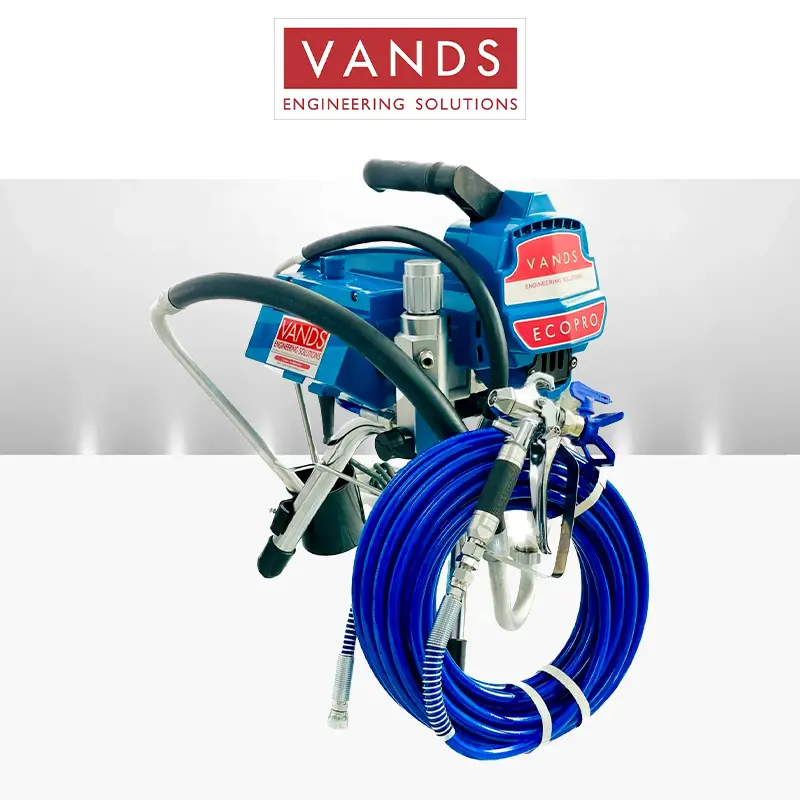
The most common type for construction and commercial projects. Powered by an electric motor, it is easy to operate, portable, and compatible with a wide range of water-based and solvent-based coatings. The Eco Pro model — 2500W, 3200 PSI, 3.5 L/min flow — is a popular choice for both interior and exterior wall painting.
2. Pneumatic Airless Painting Machine
Uses compressed air to drive the pump motor rather than an electric supply. This makes it the preferred option for environments with spark or explosion risks — such as fuel storage facilities, chemical plants, and offshore platforms. It handles heavy industrial coatings reliably and safely.
3. Heavy-Duty Airless Painting Machine
Built for large-scale continuous industrial use. These machines feature higher pressure output, greater flow capacity, and robust stainless steel pump construction. They are used in shipyards, bridge coating, and heavy manufacturing environments where the machine runs for extended periods under demanding load.
4. Petrol-Powered Airless Painting Machine
Ideal for remote outdoor locations with no electricity supply. Commonly used for road marking, bridge maintenance, and large outdoor steel structure coating where portable, self-contained operation is essential.
Key Features of a Quality Airless Painting Machine
Not every machine is built equally. These are the features that separate a reliable, high-performing airless painting machine from an average one:
- High-Pressure Pump: Operating at 227 bar or 3200 PSI ensures consistent delivery of thick coatings without pressure drops during continuous use.
- Brushless Motor: Runs quieter, uses less energy, generates less heat, and lasts significantly longer than a conventional brush motor — important for daily professional use.
- Micro Switch Pressure Control: Provides precise, accurate regulation of spray pressure, allowing the operator to fine-tune output for different paint types and surface conditions.
- Anti-Wear Piston and Alloy Ball Valves: Reduces internal wear and the likelihood of mechanical failure, lowering maintenance frequency and cost over time.
- Special O-Ring Design: An engineered seal system extends pump service life by preventing internal leaks even under sustained high-pressure operation.
- Easy-Replaceable Suction Tube: A specially built suction tube with a simple replacement design makes cleaning the ball valve quick and straightforward after every use.
- 15-Metre Hose: Provides enough operational reach to cover large surfaces or work at height without repositioning the machine constantly.
- Anti-Wear Hydraulic Oil: Protects internal pump components from friction and heat during extended spraying sessions.
- RAC 517 Standard Tip with LX 80 Gun Set: Supports interchangeable tips for flexible adjustment of spray fan width and paint flow across different applications.
- Compact Portable Design: At a net weight of around 18 kg, the machine can be moved easily between floors and job sites by a single operator.
Benefits of Using an Airless Painting Machine
Here is why professionals across industries consistently choose an airless painting machine over traditional coating methods:
- Speed: Covers large surface areas four to ten times faster than brush or roller painting — dramatically cutting project timelines.
- Smooth, Even Finish: Hydraulic atomization eliminates brush marks, roller texture, and lap lines for a clean, professional result.
- Handles Thick Coatings: Works with 100% solid coatings, epoxy, latex, and high-build materials without the need for thinning.
- Less Overspray and Material Waste: More paint reaches the target surface per pass compared to conventional air-spray methods.
- Lower Labour Costs: Fewer operators and shorter job durations mean reduced labour expenditure on every project.
- Long Service Life: Anti-wear alloy components, special O-ring construction, and a brushless motor design combine to deliver a machine that lasts for years with proper maintenance.
- Low Maintenance Costs: Durable internal materials reduce the frequency of parts replacement and service requirements.
- Works in Harsh Conditions: Built to spray 100% solid coats reliably even in tough industrial or outdoor environments.
Applications and Uses of Airless Painting Machines
The airless painting machine is trusted across a broad range of industries for fast, reliable surface coating:
Construction and Real Estate
Interior and exterior wall painting for residential apartments, commercial buildings, hospitals, and schools. These machines handle both water-based and solvent-based wall paints with equal efficiency.
Industrial Structures and Steel Fabrication
Applying corrosion-resistant primers and protective topcoats to steel beams, fabricated structures, storage tanks, and metal cladding before installation or deployment.
Infrastructure and Bridges
Coating bridge decks, flyovers, road infrastructure, and public facility structures with high-build epoxy or coal tar protective coatings. Petrol-powered models are especially useful for remote bridge and road projects.
Marine and Shipbuilding
Spraying anti-corrosion and anti-fouling coatings onto ship hulls, decks, and marine structures. Thick maritime coatings are handled effectively by high-pressure airless systems.
Roofing Applications
Applying waterproof, protective coatings across large flat or pitched roof surfaces quickly — a task that would take days with rollers is completed in hours with an airless sprayer.
Furniture and Timberwork
Finishing wooden furniture, doors, panels, and timber structures with lacquers, varnishes, and primers to a smooth, consistent standard.
How to Choose the Right Airless Painting Machine
Use this practical framework to narrow down your options:
- Pressure Rating: For standard wall paints and primers, 2000–2500 PSI is adequate. For thick industrial coatings like epoxy or 100% solid materials, choose 3000–3200 PSI.
- Flow Rate: Residential and light commercial work suits 2–3.5 L/min. Large industrial applications benefit from 5 L/min or higher for uninterrupted high-speed coverage.
- Motor Type: Brushless motors offer longer life and quieter operation — preferable for regular, heavy use. Brush motors are cost-effective for lighter or less frequent applications.
- Power Source: Electric models suit most fixed sites. Pneumatic models work in hazardous environments. Petrol-powered models are best for remote outdoor locations.
- Nozzle Size: Smaller tips (0.021–0.025 in) suit fine finishes and thinner paints. Larger tips (0.029–0.031 in and above) are needed for high-viscosity industrial coatings.
- Hose Length: A minimum 15-metre hose is recommended for buildings and large structures. Longer setups are needed for elevated or wide-span projects.
- Weight and Portability: If you move frequently between sites, choose a compact model around 18–23 kg. For fixed industrial use, heavier high-capacity machines are more appropriate.
- Spare Parts Availability: Confirm that tips, filters, hoses, seals, and pump components are readily available locally from the manufacturer or distributor.
Importance of Airless Painting Machine Manufacturers
The machine you buy is only as good as the company that built it. Selecting from reputable Airless Painting Machine Manufacturers ensures that every component — from the pump and motor to the seals and spray tip — meets consistent quality and engineering standards.
Quality manufacturers source genuine raw materials, use advanced production machinery, and test every unit before it leaves the factory. The result is equipment that performs reliably in the field, requires less frequent servicing, and maintains consistent spray output across years of professional use.
Vands Engineering Solutions is a well-established manufacturer with over 10 years of experience producing and supplying airless painting equipment across India. Their machines are built to spray 100% solid coats under harsh conditions, using anti-wear alloy components and brushless motor technology for long service life and low maintenance costs. Their product range is available at competitive prices, making professional-grade equipment accessible to contractors and industrial operators at every scale.
Always evaluate a manufacturer’s production standards, warranty policy, client record, and local service network before making a final purchase decision.
Maintenance Tips for Your Airless Painting Machine
Consistent, simple maintenance dramatically extends the life of your machine and keeps it performing at full capacity:
- Flush After Every Use: Run the appropriate cleaning fluid — water for water-based paints, mineral spirits for solvent-based — through the pump, hose, and gun until it flows clear.
- Check Hydraulic Oil Level: Inspect and replenish anti-wear hydraulic oil regularly according to the manufacturer’s recommended schedule.
- Inspect the Spray Tip Regularly: A worn tip produces an uneven, elongated fan pattern and wastes paint. Replace it when coverage quality drops noticeably.
- Clean the Ball Valve and Suction Tube: Use the easy-replaceable suction tube design to flush and clean the ball valve thoroughly after every painting session.
- Inspect Hose and Fittings Before Each Use: Look for cracks, kinks, or loosened connections. A hose failure under 3200 PSI is a serious safety hazard.
- Lubricate the Piston: Apply the manufacturer-recommended lubricant to the pump piston at the intervals specified in the service manual.
- Store Correctly: After flushing, store the machine in a dry, sheltered space. For long-term storage, fill the pump with a protective preservative fluid to prevent internal corrosion.
Conclusion
An airless painting machine is one of the most effective tools available for any project that involves coating large surfaces quickly, cleanly, and consistently. From construction walls and industrial steel structures to ship hulls and rooftops, these machines deliver speed and quality that manual methods simply cannot match.
Choosing the right airless painting machine means understanding your pressure needs, flow rate requirements, motor preference, and project environment — and buying from a manufacturer who engineers their products to last. When all of these factors align, the machine becomes a genuine long-term asset for your operation.
If you are looking for a professionally built, durable airless painting machine with proven performance in tough working conditions, explore the full product range from Vands Engineering Solutions – trusted by contractors and industrial operators across India for over a decade.
Frequently Asked Questions (FAQs)
Q1. What is an airless painting machine used for?
An airless painting machine is used to coat large surfaces quickly and evenly — including walls, steel structures, ship hulls, bridges, rooftops, and industrial facilities. It handles a wide range of coating materials from standard wall paints to thick epoxy and 100% solid industrial coatings.
Q2. How does an airless painting machine work?
It uses a high-pressure hydraulic pump to push paint through a precision spray tip at up to 3200 PSI. The paint atomizes into fine droplets as it exits the tip — no compressed air is used — and lands on the surface as a smooth, even coating.
Q3. What type of paint can be used in an airless painting machine?
These machines are compatible with water-based paints, solvent-based paints, 100% solid epoxy coatings, latex, high-build primers, and low-solid coatings. The wide pressure range and interchangeable tips allow the machine to handle both thin and thick materials effectively.
Q4. Is an airless painting machine suitable for home use?
Yes. Compact models like the Eco Pro (2500W, 18 kg) are easy enough for experienced home users and small contractors to operate. They work well for interior walls, exterior facades, ceilings, fences, and timber surfaces — delivering a smooth, professional finish.
Q5. How much pressure does an airless painting machine need?
Standard wall and ceiling paints spray well at 2000–2500 PSI. Thicker industrial coatings like epoxy, latex, and 100% solid materials require 3000–3200 PSI to atomize properly and achieve a consistent finish.
Q6. How do I maintain an airless painting machine?
Flush the system thoroughly after every use, check hydraulic oil levels regularly, inspect and replace worn spray tips, clean the ball valve and suction tube, and inspect hoses and fittings before each session. Proper maintenance keeps the machine reliable and extends its operational life significantly.
Q7. Where can I buy a reliable airless painting machine in India?
You can purchase high-quality airless painting machines from established manufacturers like Vands Engineering Solutions, which supplies a range of models designed for construction, industrial, and commercial applications — available at competitive prices with strong after-sales support across India.
