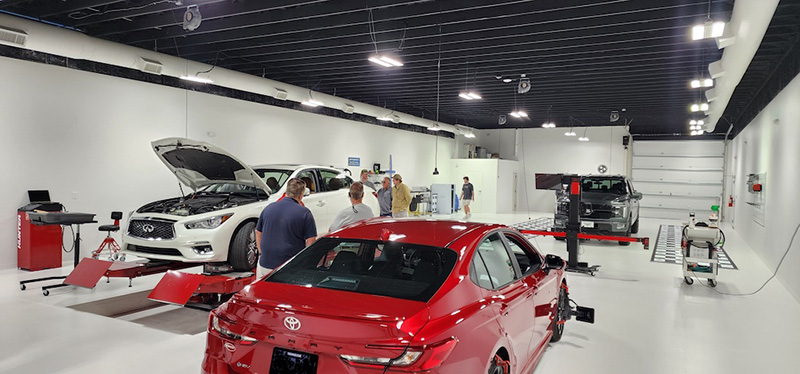
Modern transportation systems rely on intelligent safety frameworks designed to reduce human error and improve real-time driving decisions. ADAS solutions integrate radar, cameras, ultrasonic sensors, and onboard computing systems to monitor road activity continuously. These technologies work together to identify risks early and support safer driving decisions across different environments. Instead of depending only on driver reaction, vehicles now process live data to prevent accidents before they occur. This shift from passive safety to active prevention has changed how vehicles respond to traffic conditions, weather challenges, and sudden road hazards. ADAS plays a central role in improving driving accuracy and reducing collision risks.
ADAS and Its Role in Vehicle Safety
Advanced Driver Assistance Systems function as a structured safety layer inside modern vehicles. These systems collect environmental data through multiple sensors and process it using intelligent computing units. Cameras detect road markings and objects, while radar systems measure distance and speed. This combination creates a detailed understanding of the vehicle’s surroundings.
The processed information helps drivers stay aware of surrounding risks without relying solely on visual judgment. ADAS strengthens driving decisions by reducing blind spots and improving response timing. This support system does not replace human control but improves driving precision, especially in congested traffic or high-speed travel conditions where quick decisions are required.
Core Functions of ADAS in Safety Systems
ADAS includes several functions that directly contribute to safer driving and accident prevention. These systems operate continuously to monitor traffic behavior and road conditions.
Key safety functions include:
- Lane departure detection to prevent unintentional drifting
- Adaptive cruise control for maintaining safe distance from other vehicles
- Forward collision warning to alert drivers about potential impact risks
- Automatic emergency braking to reduce or prevent collisions
- Blind spot monitoring for safer lane changes
- Traffic sign recognition for better road awareness
- Pedestrian detection to improve urban driving safety
Each feature works through synchronized sensor data and fast processing. Combined operation creates a layered safety network that reacts faster than human perception. These systems adjust automatically based on traffic density, speed variations, and environmental changes, supporting consistent vehicle control in different driving conditions.
ADAS also improves highway and city driving by maintaining safe distances and reducing sudden braking situations. This coordinated system design helps reduce accident risks and improves overall traffic safety behavior.
How ADAS Reduces Human Driving Errors
Human error remains one of the leading causes of road accidents, and ADAS directly addresses this issue through continuous monitoring and real-time alerts. Fatigue, distraction, and delayed reaction often affect driving performance, especially during long journeys or heavy traffic.
ADAS reduces these risks by issuing timely warnings and corrective assistance. Lane-keeping systems help prevent drifting, while collision alerts support immediate braking response. These features act as a safety backup during moments of reduced attention. The system also supports speed control and distance management, helping drivers maintain safer driving habits.
Consistent feedback from ADAS encourages disciplined driving behavior over time. This structured assistance reduces stress during complex driving conditions and improves reaction efficiency in emergency situations where human judgment alone may not be sufficient.
Sensor Technology Behind ADAS
Sensor technology forms the foundation of ADAS performance and accuracy. Multiple sensors work together to create a complete understanding of road conditions and vehicle surroundings.
Cameras capture visual details such as lane markings, traffic signals, and nearby vehicles. Radar systems measure distance and speed, ensuring reliable detection even in fog or heavy rain. LiDAR technology provides high-resolution environmental mapping, offering precise spatial awareness. Ultrasonic sensors assist in short-range detection during parking and low-speed maneuvers.
All collected data is processed through central computing systems that interpret conditions in real time. This sensor fusion allows vehicles to maintain accurate awareness in changing environments. Advancements in artificial intelligence further improve object detection and decision-making speed, increasing overall system reliability.
Real-World Impact of ADAS on Road Safety
ADAS has significantly improved road safety outcomes for vehicles equipped with these systems. Automatic braking and lane assistance features reduce collision risks by responding faster than human reaction time. These systems help prevent accidents in both urban traffic and highway environments.
City driving benefits from pedestrian detection and traffic monitoring systems, while highway driving becomes safer through adaptive cruise control and lane guidance features. Insurance industries also recognize ADAS-equipped vehicles as lower-risk due to improved safety performance.
Driving behavior improves over time as continuous system feedback encourages safer habits. Reduced accident rates and improved awareness demonstrate the real-world effectiveness of ADAS in modern transportation systems.
Future of ADAS in Vehicle Safety Development
Future ADAS development focuses on predictive safety and higher automation levels. Vehicles will increasingly analyze road behavior and identify risks before they fully develop. This predictive capability will improve overall traffic safety and driving stability.
Artificial intelligence will play a stronger role in object recognition, decision accuracy, and system responsiveness. Vehicle-to-vehicle communication and infrastructure connectivity will improve traffic coordination and reduce congestion-related risks.
These advancements move ADAS closer to autonomous driving systems. Gradual improvements in automation will continue shaping safer transportation networks and more intelligent driving environments across global road systems.
Conclusion
ADAS has transformed modern vehicle safety by combining real-time monitoring, intelligent processing, and automated response systems. These technologies reduce human error, improve reaction speed, and strengthen driving control across multiple conditions. Sensor integration and artificial intelligence continue to improve system accuracy and reliability. The growing adoption of ADAS contributes to safer roads, fewer accidents, and better driving awareness. Continued innovation in this field will further enhance transportation safety and support the development of more advanced vehicle automation systems in the future.
