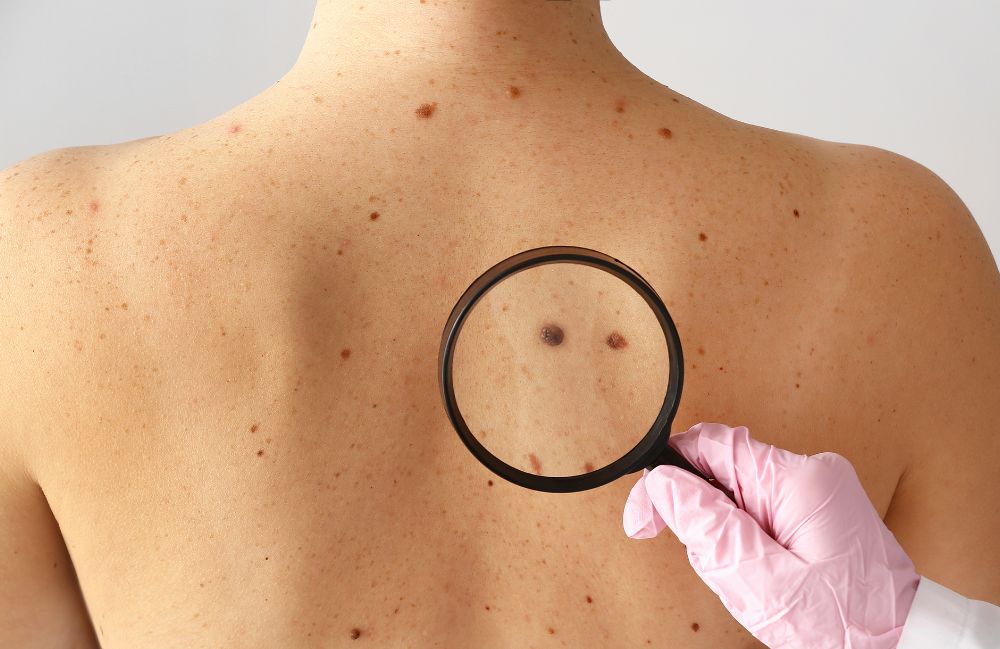
Skin cancer often develops quietly. A small spot may appear harmless or easy to ignore. A mole may change so slowly that the difference is barely noticeable. Many people delay evaluation because nothing hurts or seems urgent. Understanding the difference between a skin check and a mole check helps explain why regular exams are an important part of preventive health, especially in sunny climates.
These exams are simple, usually quick, and focused on early detection. Early detection saves lives and often makes treatment easier.
What a skin check actually is
A skin check is a full-body visual exam performed by a dermatologist. During this exam, the provider looks at the skin from head to toe, including areas that are easy to miss at home, such as the scalp, behind the ears, the soles of the feet, and between the toes.
The goal of a skin check is not only to look for skin cancer. Dermatologists also assess sun damage, precancerous lesions, and other skin changes that may need monitoring or treatment. These exams help establish a baseline, making it easier to notice subtle changes over time.
Dermatologists often recommend starting routine exams in early adulthood, especially for people with risk factors such as fair skin, frequent sun exposure, a history of sunburns, or a family history of skin cancer. In Florida and other high-UV areas, regular exams are especially important.
What a mole check focuses on
A mole check is more targeted. Instead of examining the entire body, the dermatologist closely evaluates specific moles that look unusual or have changed. These evaluations often use magnification tools and lighting to assess features that are not visible to the naked eye.
Dermatologists commonly apply the ABCDE guidelines when performing a mole check. These guidelines help identify warning signs such as asymmetry, irregular borders, uneven color, increasing diameter, or evolution over time. Moles that itch, bleed, crust, or appear after age 20 may also require closer attention.
While a mole check can be part of a full-body exam, it may also be performed as a focused visit when a specific spot causes concern.
Why these exams matter so much in Florida
Florida’s year-round sun exposure increases lifetime risk for several types of skin cancer, including melanoma, basal cell carcinoma, and squamous cell carcinoma. Ultraviolet radiation damages skin cells over time, even on cloudy days or during brief outdoor activities.
According to the Skin Cancer Foundation, early detection through professional exams greatly improves treatment outcomes. When skin cancer is found early, treatment is often simpler and less invasive.
Regular professional exams are among the most effective ways to catch changes early, especially those that are difficult to see without training or proper equipment.
What to expect during the appointment
Many people feel nervous before their first exam, often imagining discomfort or embarrassment. In reality, these visits are typically straightforward and painless.
During a full exam, patients are asked to change into a gown so the dermatologist can see as much skin as possible. The provider systematically scans for unusual spots or changes. If a concerning area is found, it may be photographed, monitored, or biopsied.
Biopsies are quick procedures performed with local anesthesia. Most patients describe them as mildly uncomfortable rather than painful. Results help guide next steps and ensure accurate diagnosis.
How to prepare for a skin or mole exam
Preparation helps make the exam more effective. Wearing loose clothing makes changing easier. Nail polish should be removed so nail beds can be examined. Makeup and heavy lotions may interfere with evaluation, especially on the face.
Bringing a list of spots that seem new, changing, or concerning helps ensure nothing is overlooked. Pointing out areas of concern is encouraged and helps guide the exam.
How often exams are needed
For most people, annual exams are sufficient. Individuals with higher risk, such as a personal history of skin cancer or numerous atypical moles, may need more frequent visits.
The American Academy of Dermatology provides guidance on screening frequency based on individual risk factors.
Consistency matters more than perfection. Regular exams over time provide the most benefit.
Self-exams and professional exams work together
At-home self-exams are encouraged between visits. Becoming familiar with existing moles and spots makes it easier to notice changes. However, self-exams do not replace professional evaluation.
Dermatologists are trained to identify patterns and subtle changes that may not stand out to untrained eyes. Professional exams add a level of precision and expertise that self-checks cannot provide.
Addressing common concerns and misconceptions
Many people avoid exams because they believe skin cancer only affects older adults. In reality, skin cancer can develop at any age. Others assume that darker skin tones are not at risk, but while risk may be lower, it is not zero.
Some worry that exams will always lead to biopsies or procedures. Most visits are routine and do not require intervention. When action is needed, early treatment often prevents more extensive procedures later.
Final thoughts
A skin check and a mole check serve different but equally important roles in preventive care. One offers a comprehensive overview, while the other provides a focused evaluation of specific concerns. Together, they support early detection, peace of mind, and long-term skin health.
Routine exams are a simple step that can make a life-saving difference, especially in regions with high sun exposure. Regular evaluation helps ensure that small changes never become serious problems.
