Anyone who has spent hours rolling paint onto a large wall knows how slow and tiring traditional methods can be. An electric airless paint sprayer changes that completely. Powered by an electric motor and driven by a hydraulic piston pump, it pushes paint through a small spray tip at high pressure — delivering a smooth, even, professional-quality finish in a fraction of the time. No air compressor is needed. No uneven streaks. Just clean, fast results across walls, rooftops, metal surfaces, furniture, and more. Whether you are a painting contractor, a builder, or an industrial operator, this guide covers everything you need to know — from how the machine works and what types exist, to features, benefits, applications, and how to buy the right one for your specific needs.
What Is an Electric Airless Paint Sprayer?
An electric airless paint sprayer is a motor-driven coating device that uses a hydraulic piston pump to push paint at very high pressure — typically up to 3200 PSI — through a precision spray tip. The paint atomizes into fine droplets as it leaves the tip, landing on the surface as a smooth, uniform layer.
Unlike traditional air-spray systems that need a separate compressor, electric models are self-contained. The electric motor drives the pump directly, making them compact, portable, and easy to use on any job site with a standard power outlet.
These sprayers work with a wide variety of coatings — water-based paints, solvent-based paints, primers, lacquers, and metal surface treatments — making them one of the most flexible tools available for painting professionals.
Types of Electric Airless Paint Sprayers
Choosing the right type starts with understanding what each category is built for.
1. Light-Duty Electric Airless Paint Sprayer
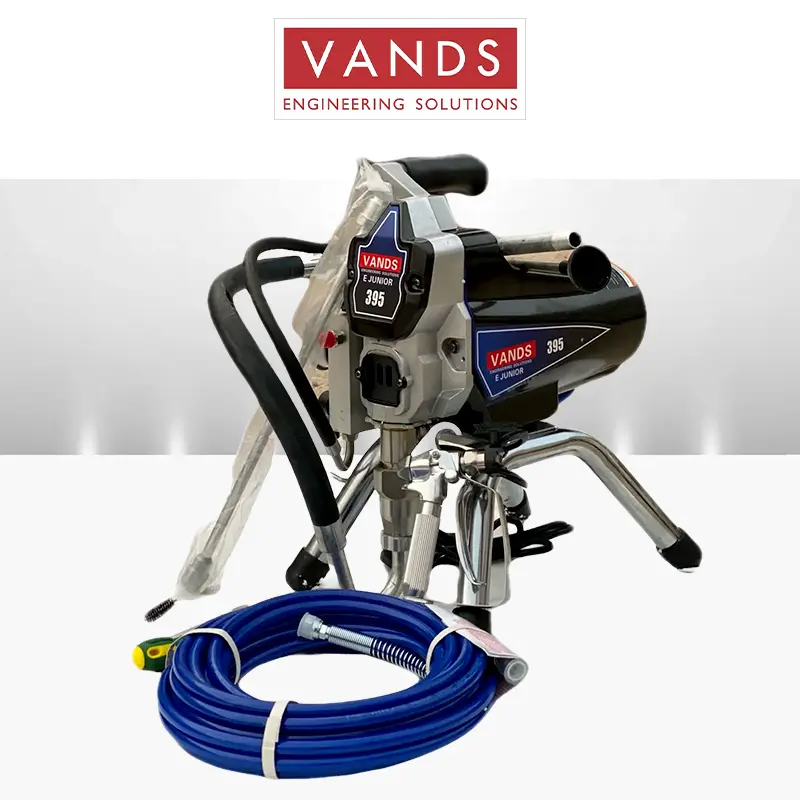
These are compact, entry-level machines — typically 1000–1500W — suited for residential painting, small commercial jobs, and timber or furniture finishing. A model like the E-Junior (1500W, 3200 PSI, 2.0 L/min flow, 14.5 kg) is a strong example. It is easy to carry, simple to operate, and handles both interior and exterior surfaces with ease.
2. Mid-Range Electric Airless Paint Sprayer
Running between 1500W and 2500W, these machines handle larger commercial buildings, warehouses, and mid-scale steel structure painting. They offer a higher flow rate and support a wider range of tip sizes for different coating viscosities.
3. Heavy-Duty Electric Airless Paint Sprayer
Built for continuous industrial use, these high-powered machines deliver flow rates of 3.5 L/min and above. They handle thick, heavy coatings and are built for shipyards, large construction sites, and rail painting operations where the machine runs for many hours at a stretch.
4. Air-Assisted Airless Electric Sprayer
A hybrid model that uses hydraulic pressure along with a small amount of air at the spray tip. This produces even finer atomization and an ultra-smooth finish, making it the preferred choice for furniture, cabinetry, and high-gloss decorative coatings.
Key Features of a Quality Electric Airless Paint Sprayer
When comparing models, focus on features that directly affect how well and how long the machine performs:
- Long-Life Pump with No Wearing Cylinder: A pump designed without a conventional cylinder reduces wear points, lowering maintenance needs and extending service life considerably.
- All-Metal Construction: Full metal housing and internal components are far more durable and reliable than plastic alternatives — essential for regular professional use.
- Precision Motor Control (PMC): This feature ensures the motor adjusts output in real time, maintaining consistent spray pressure even when paint viscosity changes.
- Balanced Fluid Manifold: Keeps paint flow even across the system, preventing pressure fluctuations that can cause uneven spray patterns.
- Mechanical Sensor Pressure Control: Gives the operator precise, reliable control over spray pressure to suit different coatings and surfaces.
- Chuck Nut Lock Suction on Hose: A secure, locking hose connection prevents accidental disconnection under high-pressure operation.
- Anti-Wear Hydraulic Oil: Reduces internal friction and protects the pump and piston during extended use.
- 15-Metre Hose: Provides enough reach to cover large surfaces or work at height without constantly moving the machine.
- RAC 517 Standard Tip Compatibility: Interchangeable tips let you adjust fan width and flow for different paint types and surface conditions.
- Lightweight and Portable Design: At around 14.5–19 kg, compact electric sprayers can be easily moved between floors and job sites by a single operator.
Benefits of Using an Electric Airless Paint Sprayer
Here is why professional painters and industrial operators choose electric airless sprayers over rollers, brushes, or conventional air-spray guns:
- Much Faster Coverage: Completes large surface painting jobs many times faster than manual methods — saving significant time on every project.
- Flawless, Mirror-Like Finish: High-pressure atomization eliminates brush marks, lap lines, and texture inconsistencies for a clean, even coat.
- No Air Compressor Required: The electric motor is fully self-contained — one less machine to transport, set up, and maintain on site.
- Works Both Indoors and Outdoors: Compact design and standard power requirements make it equally effective inside buildings and on external facades.
- Handles Multiple Coating Types: From standard wall paints and primers to lacquers, metal treatments, and roof coatings — one machine covers many applications.
- Lower Running Costs: Electric operation is more economical than pneumatic systems that continuously consume compressed air.
- Excellent Return on Investment: Faster job completion, reduced labour needs, and lower material waste mean the machine pays for itself quickly.
Applications and Uses of Electric Airless Paint Sprayers
Electric airless paint sprayers are genuinely versatile tools. Here are their most common real-world applications:
Roof Coating
Applying waterproof and protective coatings across large roof surfaces — jobs that would take days with rollers are completed in hours with an airless sprayer.
Metal Surface Treatments
Priming and painting structural steel, fabricated metal parts, storage tanks, and metal cladding with corrosion-resistant coatings quickly and evenly.
Furniture and Timberwork
Achieving a smooth, factory-quality finish on wooden furniture, doors, panels, and timber structures using lacquers, stains, varnishes, and primers.
Marine and Shipyard Applications
Coating ship hulls, decks, and offshore marine structures with thick, protective anti-corrosion paints that standard spray guns struggle to deliver.
Building and Construction Projects
Interior and exterior painting across residential buildings, commercial complexes, hospitals, schools, and industrial facilities — any setting where both speed and quality are non-negotiable.
Railroads, Streets, and Public Facilities
Painting rail wagons, platform structures, road infrastructure, kerbs, and public facility walls where large volumes of coating work need to be done efficiently.
How to Choose the Right Electric Airless Paint Sprayer
With many models available at different price points, here is a practical buying framework:
- Match Motor Power to Project Size: 1000–1500W suits residential and light commercial work. For larger commercial or industrial projects, choose 2000W or above.
- Check the Flow Rate: 2 L/min is adequate for standard wall paints. For thicker coatings or faster large-area coverage, look for 3.5 L/min or more.
- Pressure Rating Matters: Water-based wall paints spray well at 2000–2500 PSI. Epoxy, primers, and heavy coatings need 3000–3200 PSI for proper atomization.
- Choose the Right Nozzle Size: Smaller nozzles (0.021 in) suit fine finishes and thinner paints. Larger nozzles handle thicker, high-build industrial coatings.
- Prioritise Hose Length: A 15-metre hose is the minimum recommended length for working on buildings or large structures without constantly repositioning.
- Consider Weight for Portability: If you move between multiple sites, a lighter model (14–20 kg) is more practical. For fixed-site industrial use, prioritise pump capacity over portability.
- Verify Spare Parts Availability: Filters, tips, hoses, and seals should be readily available from the manufacturer or local distributors before you commit to a brand.
Importance of Electric Airless Paint Sprayer Manufacturers
The machine model matters — but so does who built it. Working with trusted Electric Airless Paint Sprayer Manufacturers ensures you get equipment made from premium raw materials, built to engineering standards, and backed by genuine after-sales support.
Manufacturers who compromise on material quality produce machines that wear out faster, spray inconsistently, and cost far more to repair than they save in productivity. In contrast, quality manufacturers engineer their products for durability, offer customisation options, and supply genuine spare parts that keep machines running for years.
Vands Engineering Solutions has earned its reputation as a reliable name in this space. With over 10 years of experience manufacturing and supplying spray painting equipment across India, their electric airless paint sprayers are hydraulic piston-driven and air-assisted — built with premium raw materials for residential, commercial, and industrial environments. They offer models in multiple standard specifications and deliver cutting-edge technology at competitive prices, giving buyers a strong return on investment over the machine’s full lifespan.
Maintenance Tips for Your Electric Airless Paint Sprayer
A well-maintained electric airless paint sprayer lasts significantly longer and performs more consistently. Follow these simple steps:
- Flush After Every Session: Run the appropriate cleaning fluid through the pump, hose, and gun until it comes out completely clear. Use water for water-based paints and mineral spirits for solvent-based paints.
- Inspect and Replace the Spray Tip: A worn tip causes an uneven, elongated fan pattern and wastes paint. Replace it at the first sign of deterioration.
- Clean the Inlet Strainer Before Every Use: A clogged suction filter reduces flow and strains the pump — a quick clean takes less than a minute.
- Monitor Hydraulic Oil Levels: Check and replenish anti-wear hydraulic oil regularly according to the manufacturer’s schedule.
- Check Hose and Gun Fittings: Look for cracks, kinks, or loose connections before operating. High-pressure leaks are a safety hazard and must be addressed immediately.
- Lubricate the Pump Piston: Apply the recommended pump lubricant as directed to prevent dry running and reduce internal wear.
- Store It Correctly: After flushing, store the machine in a dry, sheltered location. For long storage periods, fill the pump with a protective preservative fluid to prevent internal corrosion.
Conclusion
An electric airless paint sprayer is a practical, high-value tool that transforms how painting projects are handled — delivering speed, consistency, and quality that manual methods simply cannot achieve. Whether you are finishing a residential property, coating industrial steelwork, or painting marine structures, the right machine makes every job faster, cleaner, and more cost-effective.
The key is choosing a model that matches your specific workload, understanding the features that matter most, and buying from a manufacturer who stands behind their product. When you invest in the right electric airless paint sprayer, the results speak for themselves on every single project.
Ready to upgrade your painting operation? Explore the full range of professionally engineered electric airless paint sprayers from Vands Engineering Solutions — built to perform, designed to last, and priced for real-world value.
Frequently Asked Questions (FAQs)
Q1. What is an electric airless paint sprayer and how does it work?
An electric airless paint sprayer uses a motor-driven hydraulic piston pump to push paint at high pressure (up to 3200 PSI) through a precision spray tip. The paint atomizes into fine droplets without compressed air, producing a smooth, even finish on any surface.
Q2. What surfaces can an electric airless paint sprayer be used on?
It works on a wide range of surfaces including interior and exterior walls, rooftops, metal structures, wooden furniture, ship hulls, rail wagons, road infrastructure, and public facility buildings — making it one of the most versatile coating tools available.
Q3. Can an electric airless paint sprayer handle thick paints and primers?
Yes. Most models operating at 3000–3200 PSI can handle thick coatings including epoxy primers, latex, high-build paints, and metal surface treatments. Ensure the nozzle size is appropriate for the coating viscosity.
Q4. Is an electric airless paint sprayer suitable for home use?
Yes. Compact, lightweight models like the E-Junior (1500W, 14.5 kg) are ideal for home painting projects — interior walls, ceilings, wooden doors, fences, and garden furniture — delivering a professional finish without needing professional-level skills.
Q5. How do I clean an electric airless paint sprayer after use?
Flush the system with the right cleaning fluid — water for water-based paints, mineral spirits or thinner for solvent-based paints. Run the fluid through the pump, hose, and spray gun until it comes out clean. Then wipe all external surfaces and inspect the tip for residue.
Q6. How long does an electric airless paint sprayer last?
With proper maintenance — regular flushing, tip inspection, oil checks, and correct storage — a well-built electric airless paint sprayer can last many years even under daily professional use. Buying from quality manufacturers ensures better longevity and reliable spare parts supply.
Q7. Where can I buy a reliable electric airless paint sprayer in India?
You can purchase high-quality electric airless paint sprayers directly from established manufacturers like Vands Engineering Solutions, which offers hydraulic piston-driven models in multiple specifications for residential, commercial, and industrial applications — available at competitive prices across India.
